

SEARCH


There are around 9 million trees in Warsaw. Most of the trees in the capital are planted on land managed by the City Forests. The city’s districts and other municipal bodies also play their part in greening Warsaw.
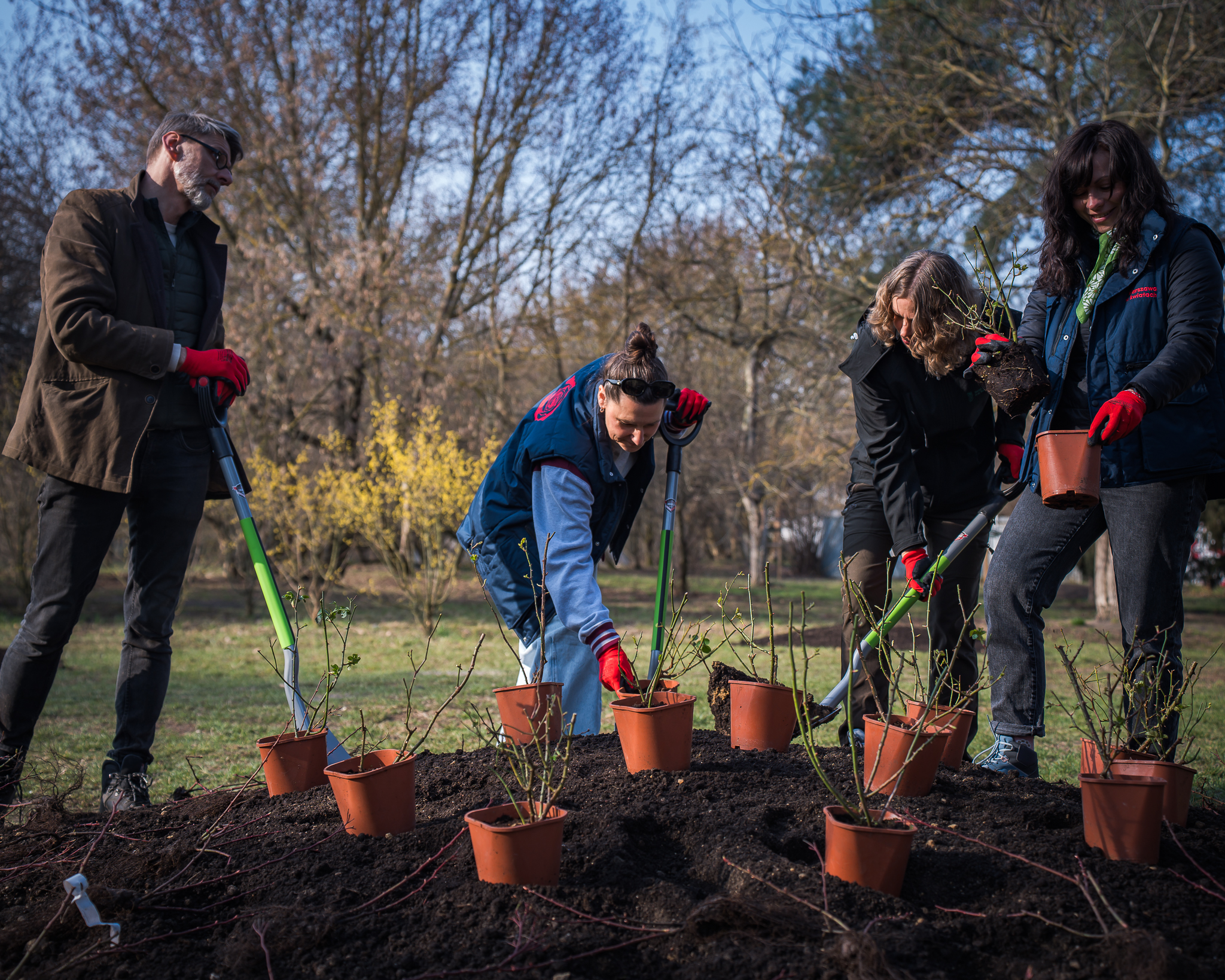
At ZZW, we also plant many young trees, both in roadside green belts and in parks, squares and green spaces.
Trees in the city are the most important element of green infrastructure and the most enduring plant life. They shape the urban landscape, mark out street directions, accompany various structures and serve as valuable landmarks. They fulfil the most essential ecological functions. The numerous benefits derived from trees have even been quantified in monetary terms.
Trees are long-lived organisms that have developed a range of mechanisms enabling them to survive for years in one place, even when conditions are extremely harsh.
Sharing urban space with trees requires appropriate knowledge, effort and planning. These are tasks which, particularly in a period of dynamic climate change, present significant challenges for the ZZW teams.
Trees in the city need suitable conditions to be created for proper growth and development. At the same time, an appropriate level of safety must be ensured
in the space where they grow. The substrate in which the roots are to develop is crucial, as the roots are responsible for properly anchoring the trees in the ground and conducting water along with the mineral salts needed for vital processes. The planting soil should therefore have a suitable structure that allows for gas exchange and water retention. Choosing the right location for a tree is crucial when planning new plantings.
Road verges pose the greatest challenge, as conditions there are the most difficult. In these locations, the soil is excessively compacted and heavily contaminated. Trees function much less effectively in such conditions. Therefore, not every ‘vacant’ roadside lawn is a suitable place to plant a tree – a thorough analysis of each site is necessary in terms of soil, underground infrastructure and the surrounding space.
We select tree species that can tolerate adverse urban conditions – periodic, prolonged droughts, air and soil pollution (e.g. elevated salinity), and high temperatures that negatively affect plant physiological processes.
Another aspect to consider when selecting species and varieties is the target parameters of the trees (primarily height and crown shape). We plan new plantings in locations where there is no conflict with existing infrastructure or buildings. Larger species are planned for large open spaces and wide green belts. In such locations, it is also possible to introduce trees which, due to their fruiting, may hinder the use of the space (falling seeds of horse chestnut trees Aesculus hippocastanum L.).
In the case of special sites, such as historic parks, trees are selected in accordance with the designer’s original plans.
Choosing the right species is half the battle. The specific nature of the city requires an individual approach every time when designing new tree plantings. There is therefore no standardised species selection; everything is done in a considered manner, taking into account many variables.
The trees we plant come from ornamental plant nurseries and have specific parameters, in line with, amongst other things, the quality recommendations of the Polish Nurserymen’s Association. For each tree planted, we specify the required trunk circumference, crown shape, height of the crown base and size of the root ball. The trees we accept for our plantings must be free from diseases and pests, with no visible mechanical damage and no fresh or unhealed cuts. It is also important that the tree has a well-developed and dense, i.e. nursery-trained, root system and a regular and symmetrical crown.

Inspection of trees delivered for planting.
We plant trees at times that are most favourable for their establishment and the quickest possible adaptation. In Warsaw, most of the trees planted are deciduous, for which late autumn is the optimal planting time. There are exceptions to this rule. These are species that establish themselves better in early spring, before the growing season begins. We always adapt the planting time to the specific characteristics of the species, so as to optimise the trees’ establishment.
After planting, the trees are covered by a 3-year guarantee. Our contractors are responsible for looking after the trees. The contracts cover: watering, fertilising, weeding, mulching, maintaining stabilisation systems, removing suckers, and carrying out sanitary and formative pruning. It should be noted that trees planted in street-side areas are particularly vulnerable to adverse conditions. Trees that have not coped with the stress following planting are monitored. If maintenance measures do not help, dead trees are replaced under the warranty with new ones – of the same species and with the same parameters. After a 3-year warranty maintenance period, the same maintenance procedures are carried out, but with less intensity. In this way, we help the trees adapt to functioning independently in difficult urban conditions.
One of our unit’s main tasks is the protection of urban tree cover. We provide comprehensive care for trees, regardless of their age. In the case of older trees, visual inspections are carried out to assess their health. Our arborists pay attention to the trunk and crown, the positioning of the branches, the vitality of the branches, and any signs of disease, fungal or bacterial infections. Where necessary, maintenance work is commissioned (e.g. removal of dead branches or suckers). As a last resort, a tree may be designated for removal – this applies to trees that may pose a threat to life or property.
We also provide intensive care for young trees. Basic maintenance work is carried out by our local gardeners. In the case of problematic trees, the gardeners are supported by a team of dendrologists. Just as with older trees, our experts can carry out comprehensive examinations of young trees using specialist equipment (e.g. acoustic tomography) or inspect the crown using arboricultural rope access techniques. All staff working with trees have the appropriate qualifications, supplemented by annual courses and training.
Since its inception, our unit has strived to create a system that will enable even more effective and comprehensive care for the city’s green spaces, including trees. In collaboration with experts from various scientific fields, particularly in the field of dendrology, we have developed standards which have been adopted by order of the Mayor of Warsaw and should be applied throughout Warsaw – both by other municipal units responsible for green spaces and by private entities.
Find out more about the standards for the design and maintenance of green spaces in Warsaw.
Audio description available on our YouTube channel.
We improve the habitat conditions for young trees by using an appropriate planting system, depending on the location where they will be planted. A different system is used for trees planted in parks and green spaces, and another for roadside verges or so-called planters in pavements. To increase the amount of air in the soil, aeration wells are also placed in the planting pits.
Improving the habitat conditions for older trees involves preventing further soil compaction and, where possible, improving soil structure by loosening the surface around the trees. This also involves the use of mulch, which promotes the growth of soil microorganisms that loosen the soil structure, or leaving a layer of fallen leaves under the tree canopies. During the winter, although this is the plants’ dormant period, snow should not be piled up under trees, as it is contaminated with salt, which is harmful to trees.
How can greenery be protected during construction works? How should it be cared for during and after the project? What criteria must plants intended for planting meet? These and other questions are addressed in the Standard for the Protection of Greenery in Development Projects within the Capital City of Warsaw. The document was drawn up by experts from our unit.
The new standard outlines not only how to care for trees, but also for shrubs, perennials and lawns. The document includes examples of solutions that can help protect vegetation – such as root tunnels and point foundations. The standard also reminds us how to care for wild animals covered by species protection.

Tying in the tree crown.
We select trees in poor health for felling, as they pose a threat to the safety of people and property. Sometimes trees pose a threat to historic buildings or interfere with ongoing development projects. In such cases, we always investigate whether there are alternative solutions that would allow the tree to be retained in the given space.
Trees for felling are selected during tree surveys. If there are doubts regarding the condition of a tree, the plants are additionally examined by dendrologists. In the event of further doubts and the need for tests using equipment we do not possess, the tree may be referred to the third stage of assessment – by an independent, external expert.
What is the procedure?
With regard to the removal of trees and shrubs, we are bound by the procedure set out in the Nature Conservation Act of 16 April 2004.
Once the need to remove a tree or shrub has been confirmed, we check whether a permit is required under the Act. If so, we prepare an application for a permit to remove the tree or shrub. Depending on the land ownership or the nature of the property, the authority responsible for considering the application is the Environmental Protection Department of the relevant District Office, the Marshal’s Office of the Mazowieckie Province, or the Mazowieckie Provincial Conservator of Monuments.
An inspection of the trees or shrubs marked for removal is then carried out in the presence of our employee and a representative of the relevant authority. Based on all the information gathered, a decision is issued granting or refusing permission to remove the tree or shrub. A decision granting permission specifies the deadline by which the tree or shrub must be removed and is often conditional upon the planting of replacement trees or shrubs.
In accordance with the Standard for Notification of Tree Felling, we publish applications and decisions regarding tree felling on the Warsaw map service under the ‘I know about tree felling’ layer [link opens in a new window]. Offices, district councils and organisational units of the Capital City of Warsaw are also required to publish these documents there. The decisions also contain information on replacement planting. The Standard defines the scope of internal and external communication with residents – depending on the sensitivity of the felling.
Where possible, we leave dead trees, known as ‘witness trees’. We first ensure that they do not pose a hazard. The hollows and crevices within them provide shelter for insects, birds and bats. Dead wood is also fed upon by arthropods known as ‘detritivores’. Dead trees are also home to numerous species of fungi and lichens. They therefore fulfil very important functions in nature, particularly crucial for the cycle of matter and energy. If it is not possible to leave standing (dead or dying) trees, we often leave fallen logs or piles of branches.

An ancient tree surrounded by braids of brushwood.
It is our practice to replant in the areas where trees and shrubs have been removed, or in their vicinity. The authority issuing the permit for the removal of trees or shrubs may make their felling conditional upon the carrying out of replacement planting. In such cases, the felling permit specifies the location, quantity, species, trunk circumference of the trees, shrub area and the date of planting.
The choice of species and planting parameters depends on many factors, including: preserving the existing composition (particularly in historic settings), the hardiness of the species, soil conditions, development plans and aesthetic considerations.